

Key Takeaway:
Struggling with substance use is difficult enough on its own. When depression, anxiety, trauma symptoms, severe mood changes, or another mental health problem is happening at the same time, it can become much harder to understand what is causing what, or what kind of treatment to seek.
This is where dual diagnosis treatment, also called treatment for co-occurring disorders, may become important. The goal is not simply to label someone with two conditions. It is to identify how mental health and substance use are interacting and build a treatment plan that addresses both.
Dual diagnosis treatment may be appropriate when substance use and persistent mental-health symptoms such as depression, anxiety, trauma symptoms, or mood instability occur together and interfere with daily life. A qualified assessment is important because intoxication, withdrawal, and independent mental-health conditions can produce similar symptoms. When both conditions are present, integrated treatment addresses them together rather than treating one in isolation.
What Is Dual Diagnosis Treatment?
A dual diagnosis means that a person has both a substance use disorder and a mental-health disorder. Clinicians increasingly use the term co-occurring disorders because a person may have more than two relevant conditions.
Examples may include:
- alcohol use disorder with depression
- opioid use disorder with PTSD
- stimulant use disorder with anxiety
- substance use disorder with bipolar disorder
These relationships are complex. A mental-health condition can contribute to substance use, substances can worsen psychiatric symptoms, and both conditions can share risk factors such as genetics, stress, or trauma. One does not automatically prove that the other caused it. SAMHSA’s guidance on co-occurring disorders
The issue is also common. SAMHSA’s 2025 National Survey on Drug Use and Health estimated that approximately 18.5 million U.S. adults had both a substance use disorder and any mental illness during the previous year. The survey measures whether both occurred within the year; it does not establish that both were present at exactly the same time. 2025 National Survey on Drug Use and Health results
7 Signs Dual Diagnosis Treatment May Be Worth Considering
These signs do not diagnose a co-occurring disorder. They indicate circumstances in which a comprehensive assessment may be particularly useful.
1. You Regularly Use Alcohol or Drugs to Cope With Anxiety, Depression or Emotional Pain
Some people notice that they drink or use drugs primarily when they feel anxious, depressed, overwhelmed, unable to sleep, emotionally numb, or reminded of a traumatic experience.
The substance may provide temporary relief, but that does not mean it is treating the underlying condition. Alcohol and drugs can alter sleep, mood, stress responses, judgment, and brain function, and repeated use may ultimately intensify some of the symptoms a person was trying to manage.
This is sometimes described as self-medication, but clinicians still need to determine whether an independent mental-health disorder is present rather than assuming why the substance use began.
2. Mental-Health Symptoms Keep Returning Alongside Substance Use
A pattern may develop in which anxiety, depression, irritability, panic, traumatic memories, or mood changes become worse during periods of heavier substance use.
The reverse can also happen: worsening psychiatric symptoms may be followed by increased drinking or drug use.
This relationship matters because the two problems can reinforce each other. Treating only the substance use may leave important psychiatric symptoms unaddressed, while treating only the mental-health symptoms may overlook substance-related factors that interfere with progress.
SAMHSA recommends integrated screening and treatment when mental-health and substance use disorders coexist. SAMHSA’s integrated treatment guidance
3. Depression or Anxiety Continues Even When You Are Not Intoxicated
Persistent symptoms deserve assessment, especially when they continue beyond periods of intoxication.
However, timing matters.
Alcohol and drugs can themselves cause psychiatric symptoms. Withdrawal can also produce anxiety, depressed mood, agitation, insomnia, irritability, and other changes that may resemble an independent mental-health disorder.
For that reason, clinicians consider:
- when the symptoms began
- whether they existed before substance use
- how they change during intoxication or withdrawal
- whether they persist during periods without substance use
- family and medical history
- current medications
- overall functioning
A clinician may therefore need time and repeated observation before determining whether symptoms reflect an independent mental disorder, a substance-induced condition, or both.
4. Treatment for One Problem Has Not Addressed the Other
Perhaps you have received counseling for anxiety but continue relying heavily on alcohol. Or you have completed addiction treatment but still experience severe depression, trauma symptoms, or panic.
That does not necessarily mean the earlier treatment “failed.”
It may mean the treatment plan did not sufficiently address how both conditions interact.
Integrated care matters because clinicians can coordinate mental-health treatment, substance use treatment, medications when clinically appropriate, behavioral therapies, and continuing support around one treatment plan rather than leaving separate problems disconnected.
5. Substance Use and Mental-Health Symptoms Are Affecting Daily Functioning
Professional assessment becomes particularly important when symptoms begin interfering with:
- work or school
- relationships
- sleep
- finances
- personal care
- legal responsibilities
- medication adherence
- ability to stay safe
- ability to reduce or control substance use
A substance use disorder is not defined simply by how frequently someone drinks or uses drugs. Clinical assessment considers loss of control, consequences, impaired functioning, tolerance, withdrawal, risky use, and other patterns.
Likewise, mental-health diagnoses depend on specific symptoms, duration, severity, and their effect on functioning.
This is why a comprehensive evaluation provides more useful information than trying to decide from a single symptom whether someone has a dual diagnosis. NIMH information on substance use and mental health
6. Your Symptoms Seem Too Interconnected to Treat Separately
You may notice a cycle such as:
anxiety → drinking → temporary relief → disrupted sleep → greater anxiety → more drinking
or:
trauma reminder → distress → drug use → relationship problem → depression → further drug use
These cycles illustrate why integrated treatment can be useful. The treatment team can examine triggers, coping strategies, psychiatric symptoms, substance use patterns, social environment, and recovery goals together rather than treating them as unrelated problems.
Behavioral treatments may include approaches such as cognitive behavioral therapy, motivational interviewing, and other evidence-supported interventions depending on the diagnoses and individual clinical needs.
7. There Are Serious Safety Concerns
Immediate safety needs take priority over determining whether someone technically meets criteria for a dual diagnosis.
Seek emergency medical care or call 911 in the United States for situations such as:
- suspected overdose
- difficulty breathing
- loss of consciousness
- seizures
- severe confusion
- another immediate medical emergency
If you are experiencing suicidal thoughts, feel unable to stay safe, or are in a mental-health crisis, call or text 988 or use the 988 Lifeline chat. 988 Suicide & Crisis Lifeline
Having Anxiety or Depression Does Not Automatically Mean You Have a Dual Diagnosis
This distinction is important.
Someone may experience anxiety, depression, paranoia, insomnia, or mood changes because of:
- an independent mental-health disorder
- intoxication
- withdrawal
- medication effects
- another medical condition
- a combination of factors
For example, withdrawal from some substances can cause anxiety and sleep disturbance, while stimulant use or withdrawal can produce substantial changes in mood.
Clinicians therefore evaluate symptoms over time rather than automatically diagnosing a mental-health disorder based on how someone feels during active substance use or early withdrawal.
The practical reason is simple: the cause of the symptoms can affect the treatment plan.
What Happens During a Dual Diagnosis Assessment?
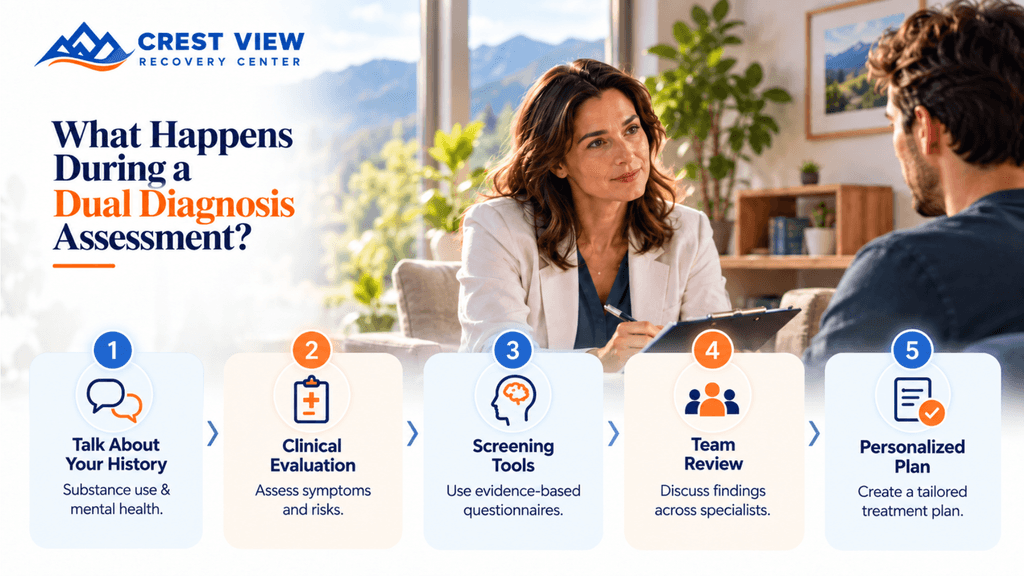
A proper evaluation usually looks at much more than whether someone answers “yes” to having anxiety or depression.
Depending on the setting, clinicians may review:
Substance use history
This can include:
- substances used
- amount and frequency
- duration
- attempts to stop
- withdrawal history
- overdose history
- consequences of use
Mental-health symptoms
Assessment may explore depression, anxiety, traumatic stress, mania, psychosis, attention problems, suicidal thinking, and other symptoms when relevant.
Timing of symptoms
This helps distinguish possible independent psychiatric conditions from symptoms primarily related to intoxication or withdrawal.
Medical history
Medical conditions and medications can sometimes contribute to psychological symptoms or change the risks associated with substance use.
Home and social environment
Housing stability, relationships, work, family support, exposure to substances, and other environmental factors can influence the type and intensity of treatment that is realistic and safe.
A comprehensive assessment matters because dual diagnosis treatment should be individualized rather than based solely on a diagnosis name.
How Does Dual Diagnosis Treatment Work?
Integrated treatment coordinates care for the substance use disorder and mental-health condition rather than postponing one until the other has disappeared.
Treatment may involve several components.
Behavioral Therapy
Therapy can help people understand connections among thoughts, emotions, behaviors, triggers, and substance use.
Depending on the person and diagnosis, treatment may include cognitive behavioral therapy, motivational interviewing, skills training, trauma-informed approaches, or other evidence-supported therapies.
Crest View currently lists cognitive behavioral therapy for addiction and dialectical behavior therapy among its therapy resources.
These therapies serve different purposes and should be selected according to the individual’s clinical needs rather than assuming one therapy works for every co-occurring disorder.
Medication When Clinically Appropriate
Medication may sometimes be used for a mental-health disorder, a substance use disorder, or both.
The appropriate medication depends on the diagnosis.
For example, medications used to treat opioid use disorder are different from medications used for alcohol use disorder or depression. Medication decisions also require attention to other prescriptions, substance use, medical conditions, and potential interactions.
Crest View lists a current Medication-Assisted Treatment program. Specific medication suitability should be determined through individual medical assessment rather than assuming MAT applies to every type of addiction.
Family and Social Support
Family involvement can be useful when it is appropriate and the person receiving treatment agrees to it.
Mental illness and substance use can affect communication, boundaries, trust, finances, and caregiving roles. Addressing those patterns may make the home environment more supportive of treatment goals.
Crest View also maintains a current family therapy and family-support resource.
Continuing Care
Treatment needs may change over time.
A person who initially requires frequent structured treatment may later transition to fewer clinical hours while continuing therapy, medication management, peer support, or other recovery services.
Planning this transition matters because improvements made during structured treatment still need to be applied in everyday settings.
Crest View describes a current aftercare planning program focused on the transition following more structured treatment.
What Level of Care Is Appropriate for Dual Diagnosis?
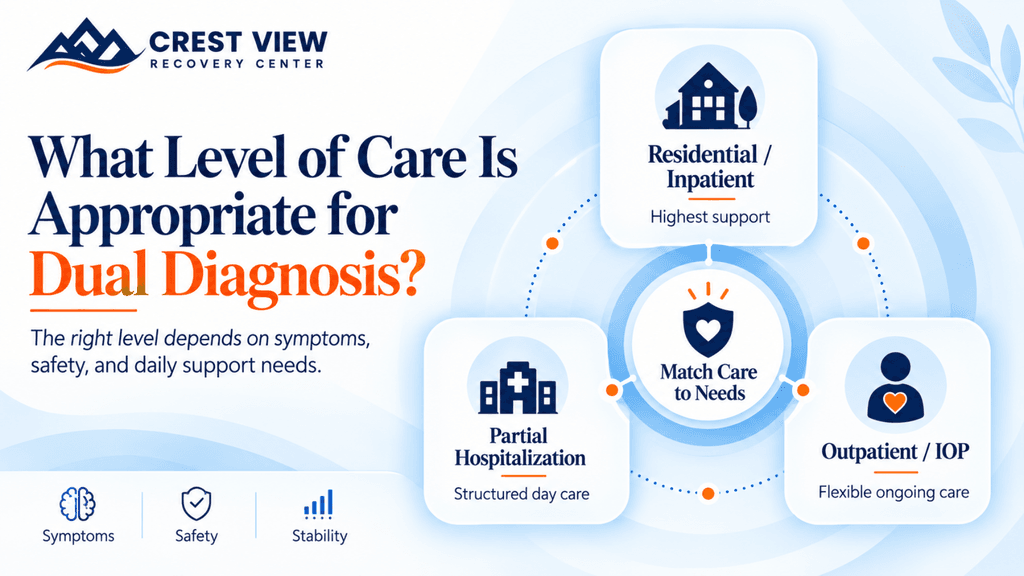
There is no single level of care called “dual diagnosis rehab.”
A person might receive treatment in an outpatient setting, an intensive outpatient program, a highly structured day program, or a more medically intensive environment depending on their needs.
The ASAM Criteria use a multidimensional assessment that considers biomedical, psychiatric, substance-related, environmental, and functional needs when determining placement and movement between levels of addiction care. ASAM Criteria overview
Important considerations may include:
- withdrawal risk
- medical stability
- severity of psychiatric symptoms
- suicide or self-harm risk
- ability to function safely outside structured care
- frequency and severity of substance use
- previous treatment history
- living environment
- available support
- ability to participate consistently in outpatient treatment
This is why the most intensive treatment is not automatically the most appropriate treatment. The goal is to match clinical intensity to actual risk and need.
Dual Diagnosis Treatment at Crest View Recovery Center
Crest View Recovery Center’s current dual diagnosis page describes an outpatient dual diagnosis program in Asheville, North Carolina for people experiencing both substance use and mental-health disorders. Crest View dual diagnosis treatment
Current program-specific pages also describe:
- Day Treatment and SACOT in Asheville, which Crest View describes as structured outpatient treatment involving several hours of programming on multiple days.
- Intensive Outpatient Programming (IOP), which combines ongoing addiction treatment with greater independence outside treatment hours.
- behavioral and individual therapies used according to treatment needs.
- ongoing recovery and aftercare resources.
Crest View also describes a “reality-based” model in which some treatment activities emphasize applying coping and life skills in settings that resemble everyday life. This is Crest View’s treatment philosophy rather than evidence that the model is clinically superior to other established approaches.
For someone with co-occurring disorders, the relevant question is not simply whether a program calls itself dual diagnosis treatment. It is whether the program can appropriately assess and address both the substance use disorder and the psychiatric condition at the intensity the person needs.
People whose withdrawal, medical condition, or psychiatric symptoms require hospital-level, residential, or 24-hour medical care may need a different level of care or an outside provider before outpatient treatment is appropriate.
How to Choose a Dual Diagnosis Treatment Program?
When comparing treatment options, ask practical questions such as:
- Does the program assess both substance use and mental health?
- Are qualified mental-health clinicians involved?
- How are psychiatric symptoms monitored?
- Are medications evaluated when clinically appropriate?
- What therapies are used, and why?
- How is the level of care determined?
- What happens if withdrawal or psychiatric symptoms require more intensive medical treatment?
- Is there a plan for continuing care?
- How are families involved when appropriate?
- How are costs and insurance benefits explained?
These questions matter because “dual diagnosis” can be used broadly in marketing. What matters clinically is whether the program can deliver coordinated treatment appropriate to the person’s actual diagnoses and risk level.
When Should You Seek an Assessment?
You do not need to determine for yourself whether addiction caused the depression, whether anxiety caused the drinking, or which condition began first before asking for help.
An assessment may be reasonable when:
- substance use is becoming difficult to control
- anxiety or depression repeatedly accompanies substance use
- mental-health symptoms interfere with everyday functioning
- previous treatment has addressed only one part of the problem
- you use substances mainly to change how you feel emotionally
- you are unsure whether symptoms are related to withdrawal, substance use, or an independent mental-health condition
If you are considering treatment in Asheville, you can speak with the Crest View admissions team about its current outpatient programs and whether an assessment indicates that one of its available levels of care may be appropriate.
Crest View also provides an insurance verification resource. Insurance benefits should always be verified for the individual policy because coverage can depend on the plan, network status, medical-necessity requirements, deductibles, authorization, and the specific level of care.
Conclusion
If substance use is occurring alongside persistent depression, anxiety, trauma symptoms, or other mental-health concerns, dual diagnosis treatment may be worth considering because effective care should account for how both conditions interact. A professional assessment can help separate substance-induced symptoms from independent psychiatric conditions and determine the appropriate level of care. Crest View Recovery Center currently describes an outpatient dual diagnosis program in Asheville; its admissions team can discuss current program options and whether they fit your clinical needs.
Frequently Asked Questions
1. What is the most common dual diagnosis?
There is no single combination that defines dual diagnosis. Depression, anxiety disorders, PTSD, bipolar disorder, and other mental-health conditions can occur alongside alcohol or drug use disorders. SAMHSA emphasizes that many different combinations can qualify as co-occurring disorders.
2. How do I know if I have a dual diagnosis?
You cannot reliably diagnose a dual diagnosis from symptoms alone. A clinician needs to evaluate both substance use and mental-health symptoms, including when each began and whether psychiatric symptoms occur outside intoxication or withdrawal. This matters because substance-induced symptoms can sometimes resemble independent mental-health disorders.
3. What is the best treatment for dual diagnosis?
Clinical guidance generally supports integrated care that addresses the substance use disorder and mental-health condition together. The exact treatment may include behavioral therapy, medications, care management, peer or family support, and different levels of treatment depending on the person’s diagnoses and risks.
4. Can substance use cause anxiety or depression?
Substance use, intoxication, and withdrawal can contribute to anxiety, depression, sleep problems, mood changes, and other psychiatric symptoms. They can also occur alongside an independent mental-health disorder, which is why clinicians consider symptom timing and persistence before reaching a diagnosis.
5. Do you have to go to inpatient rehab for dual diagnosis?
No. The appropriate setting depends on withdrawal risk, psychiatric severity, medical needs, functioning, and the person’s environment. Some people can receive coordinated treatment through outpatient or intensive outpatient programs, while others may require more intensive medical or psychiatric care.
6. Can depression and addiction be treated at the same time?
Yes. When both disorders are present, integrated treatment is generally recommended rather than assuming one must be completely resolved before addressing the other. Coordinated treatment matters because each condition can influence symptoms, treatment engagement, and recovery from the other.
7. What should I ask a dual diagnosis treatment center before enrolling?
Ask how the program evaluates mental-health and substance use disorders, who provides psychiatric care, what therapies are used, how medications are handled, how treatment intensity is determined, and what happens if you require a higher level of care. These questions help distinguish a genuinely coordinated clinical program from one that simply uses “dual diagnosis” as a general marketing term.