
Key Takeaway:
Watching someone who drinks heavily become increasingly confused, forget conversations, stumble when walking, or behave differently can be alarming. Families may initially assume the person is intoxicated, aging, or simply exhausted.
Those changes can sometimes have another explanation. One important possibility is Wernicke-Korsakoff syndrome, commonly referred to as “wet brain,” a serious neurological condition associated with severe thiamine deficiency.
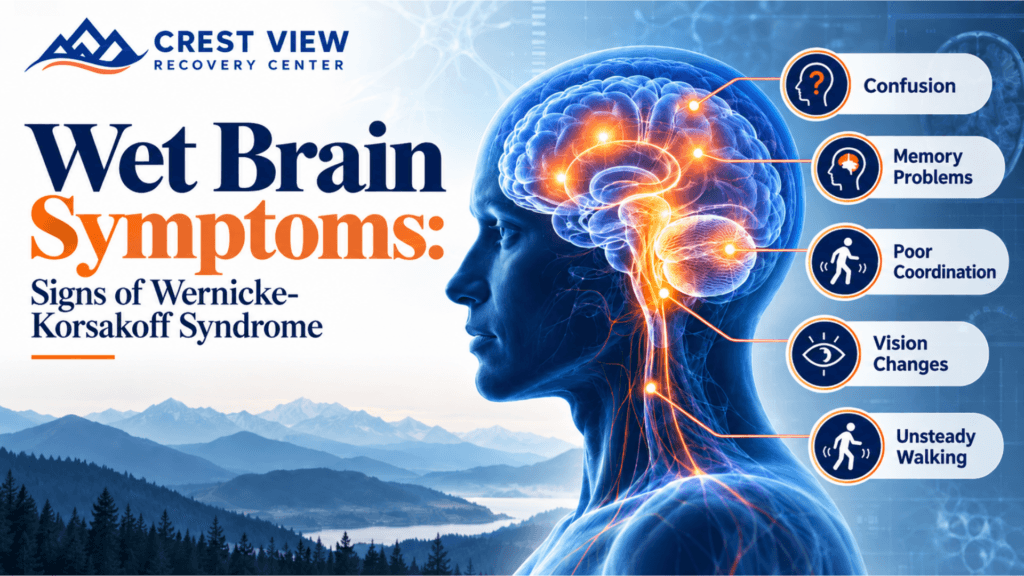
Wet brain is a nonmedical term most often used for Wernicke-Korsakoff syndrome, a serious brain disorder caused by severe thiamine, or vitamin B1, deficiency. Early wet brain symptoms can include confusion, difficulty walking, and abnormal eye movements. Later symptoms may include severe memory loss and confabulation. Suspected Wernicke encephalopathy requires urgent medical evaluation and treatment.
What Does “Wet Brain” Actually Mean?
“Wet brain” is an informal phrase rather than a medical diagnosis. Clinicians generally use the terms Wernicke encephalopathy, Korsakoff syndrome, or collectively Wernicke-Korsakoff syndrome (WKS).
The two conditions are related but not identical.
Wernicke encephalopathy is the acute, potentially life-threatening phase caused by severe thiamine deficiency. Korsakoff syndrome is a longer-lasting disorder dominated by severe problems with learning and memory and often develops after Wernicke encephalopathy has not been recognized or adequately treated. NIAAA overview of Wernicke-Korsakoff syndrome
This distinction matters because early Wernicke symptoms can improve when treatment begins promptly, whereas established Korsakoff-related memory damage can be much more difficult to reverse.
What Are the Most Important Wet Brain Symptoms?
Wet brain symptoms depend partly on which phase of Wernicke-Korsakoff syndrome is occurring.
Early Wernicke Encephalopathy Symptoms
Important signs include:
- new or worsening confusion or disorientation
- difficulty paying attention or thinking clearly
- poor balance or an unsteady, wide-based walk
- loss of muscle coordination, known as ataxia
- abnormal back-and-forth eye movements called nystagmus
- double vision
- crossed or misaligned eyes
- drooping eyelids
- unusual weakness or lack of energy
- low body temperature or low blood pressure in severe cases
- declining consciousness or coma in advanced cases
The traditional description of Wernicke encephalopathy emphasizes confusion, impaired coordination, and abnormal eye movements. However, people do not always develop all three signs, which is one reason the disorder can be missed.
That matters clinically because waiting for a “textbook” combination of symptoms can delay thiamine treatment while neurological injury continues.
Later Korsakoff Syndrome Symptoms
Korsakoff syndrome is especially associated with memory and executive-function problems. Signs may include:
- severe difficulty forming new memories
- gaps in past memories
- repeatedly asking the same questions
- forgetting conversations that happened recently
- difficulty learning new information
- problems planning or organizing everyday activities
- impaired judgment
- reduced motivation or emotional apathy
- hallucinations in some cases
- repeated actions or statements
- confabulation
Confabulation means unintentionally filling memory gaps with information that is inaccurate. The person is generally not deliberately lying; damaged memory systems can make the invented or distorted memory feel real to them.
When Are Wet Brain Symptoms an Emergency?
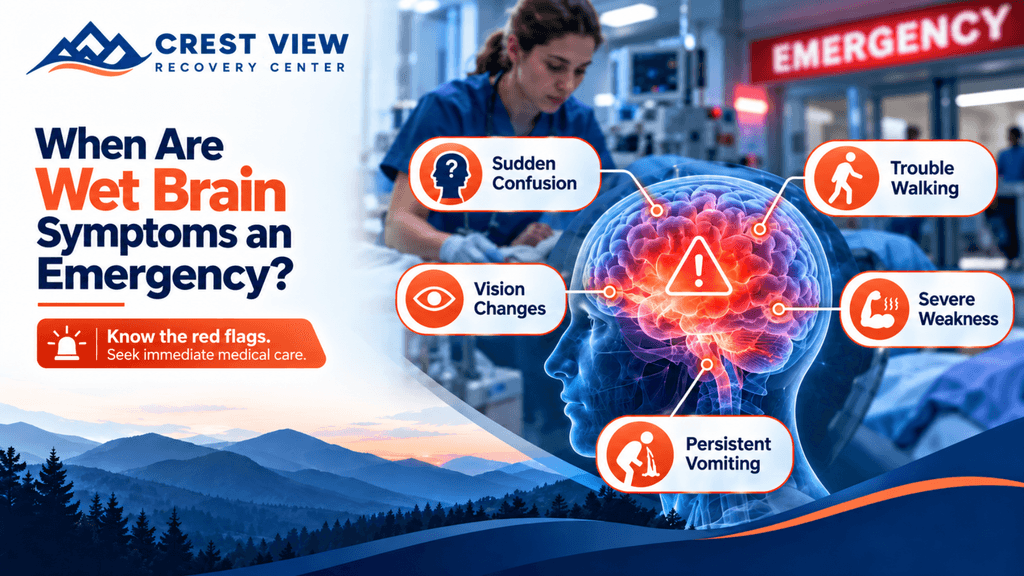
Suspected Wernicke encephalopathy should be treated as a medical emergency because prompt thiamine replacement may prevent additional neurological damage. NIAAA specifically describes early Wernicke disease as requiring emergency treatment.
A person with a history of heavy alcohol use or severe malnutrition needs urgent medical evaluation if they suddenly develop confusion together with difficulty walking, balance problems, or abnormal eye movements.
Call 911 or seek emergency medical care for a seizure, loss of consciousness, severe confusion, inability to safely stand or walk, breathing problems, or another rapidly worsening neurological condition.
Do not assume that a confused person simply needs to “sleep it off.” Intoxication, alcohol withdrawal, head injury, stroke, infection, low blood sugar, liver-related encephalopathy, medication effects, and Wernicke encephalopathy can overlap in appearance. Distinguishing among them may require medical assessment.
Why Can Heavy Alcohol Use Cause Wet Brain?
The central problem is thiamine deficiency.
Thiamine, or vitamin B1, is required for cellular energy metabolism. The brain has high energy demands, so inadequate thiamine can interfere with normal neuronal function and eventually contribute to injury in areas involved in memory, movement, vision, and other functions.
Long-term heavy alcohol use can increase the risk in several interconnected ways. People may eat poorly and consume inadequate amounts of thiamine, and alcohol-related changes can interfere with the body’s ability to absorb, store, and use available thiamine efficiently.
This explains why wet brain is not simply “alcohol poisoning of the brain.” Alcohol exposure is important, but severe nutritional deficiency, particularly thiamine deficiency, is central to Wernicke-Korsakoff syndrome.
Alcohol Is Not the Only Cause
Wernicke-Korsakoff syndrome can also occur without alcohol use.
Severe malnutrition or impaired nutrient absorption associated with conditions such as prolonged vomiting, eating disorders, gastrointestinal or bariatric surgery, cancer, dialysis, and certain serious illnesses can also produce thiamine deficiency. MedlinePlus information on Wernicke-Korsakoff syndrome
That distinction prevents another common misconception: a diagnosis of Wernicke encephalopathy does not by itself prove that someone has an alcohol use disorder.
Can Wet Brain Look Like Ordinary Intoxication?
Yes, and that overlap can make the condition difficult for families to recognize.
A person who is intoxicated may slur speech, lose balance, become forgetful, or appear confused. Wernicke encephalopathy can also cause confusion and severe problems with coordination.
The practical problem is that a family member cannot reliably determine the cause from appearance alone.
If neurological symptoms seem new, unusually severe, persist beyond expected intoxication, appear while the person is not obviously intoxicated, or occur alongside malnutrition or long-term heavy drinking, professional assessment is warranted.
Do not wait for every classic symptom to appear before seeking help.
How Doctors Diagnose Wernicke-Korsakoff Syndrome?

There is no single home test that can confirm wet brain.
Clinicians typically consider:
- the person’s symptoms and neurological examination
- drinking history
- nutritional status
- recent weight loss or prolonged vomiting
- conditions that interfere with nutrient absorption
- laboratory findings
- other possible neurological or medical causes
MRI may show characteristic abnormalities and can support the diagnosis, but normal or inconclusive imaging does not necessarily eliminate Wernicke encephalopathy. MedlinePlus notes that treatment should begin promptly when the condition is suspected rather than waiting for imaging to prove it.
This matters because the potential consequence of delayed treatment is considerably more serious than the inconvenience of an urgent medical evaluation.
How Is Wet Brain Treated?
Urgent Thiamine Replacement
The central treatment for suspected Wernicke encephalopathy is rapid replacement of thiamine under medical supervision.
Because absorption may be unreliable in a severely deficient person, acute Wernicke encephalopathy is commonly treated with thiamine given by injection rather than relying only on food or an over-the-counter vitamin. Specific dosing and treatment duration depend on the clinical situation and should be determined by medical professionals.
ASAM’s alcohol withdrawal management guideline likewise advises clinicians to provide thiamine to prevent Wernicke encephalopathy and recommends immediate parenteral treatment when Wernicke encephalopathy is suspected.
Food and oral vitamins may support long-term nutrition, but they should not be treated as substitutes for emergency evaluation when neurological symptoms suggest Wernicke encephalopathy.
Managing Other Medical Problems
Doctors may also need to address dehydration, electrolyte abnormalities, poor nutrition, injuries from falls, liver problems, infections, withdrawal, or other complications.
This broader medical assessment matters because heavy alcohol use and malnutrition can affect multiple organ systems at the same time.
Treating Alcohol Use Disorder
After the immediate neurological condition has been stabilized, addressing alcohol use is important because continued heavy drinking can contribute to additional nutritional deficiency and neurological damage.
Treatment for alcohol use disorder can include behavioral therapies, medications, peer support, and different levels of structured care depending on the person’s medical stability and clinical needs. NIAAA guidance on treatment for alcohol problems
Treatment intensity should be selected through assessment rather than automatically sending everyone to the same setting. NIAAA distinguishes outpatient, intensive outpatient or partial-hospitalization care, residential care, and medically directed inpatient services.
Is Wet Brain Reversible?
The most accurate answer is: sometimes, depending largely on which neurological damage has occurred and how quickly treatment begins.
Prompt treatment of Wernicke encephalopathy can improve symptoms, particularly some eye-movement and coordination problems. Confusion may also improve, although recovery can occur at different speeds.
Korsakoff syndrome is different. Severe memory impairment may persist even after thiamine levels are corrected because structural neurological damage has already occurred. NIAAA notes that Korsakoff-related damage can become permanent, although rehabilitation and supportive therapies may help some people function better despite remaining deficits.
That is why the timing of treatment matters scientifically: replacing thiamine can correct the deficiency, but it cannot reliably restore neurons that have already sustained irreversible injury.
What Should You Do If You Think a Loved One Has Wet Brain?
First, focus on medical safety rather than convincing the person that they have a particular diagnosis.
If they have acute confusion, severe balance problems, unusual eye movements, a seizure, loss of consciousness, or rapidly worsening symptoms, seek emergency care.
If their symptoms are less acute but you have noticed progressive memory problems, repeated stories or questions, worsening nutrition, frequent falls, or major changes in judgment, arrange a medical evaluation rather than assuming the problem is normal aging or intoxication.
Bring clinicians as much concrete information as possible: how much and how often the person drinks, when symptoms began, whether symptoms occur when sober, recent falls or injuries, eating patterns, weight changes, medications, and any history of alcohol withdrawal.
That information matters because clinicians are trying to distinguish among several conditions that can produce similar symptoms.
Do Not Attempt Unsupervised Alcohol Withdrawal
Someone who has been drinking heavily for a prolonged period should not be told simply to stop abruptly without considering withdrawal risk.
Alcohol withdrawal can cause tremors, vomiting, rapid heart rate, seizures, hallucinations, and delirium and can become life-threatening in some people. NIAAA clinical information on alcohol use disorder and withdrawal
A medical professional can determine whether withdrawal can be managed safely in an outpatient setting or whether medically supervised withdrawal is needed.
This is especially important when suspected Wernicke encephalopathy is already present because confusion, coordination problems, withdrawal, and nutritional deficiency may occur together.
Alcohol Treatment After Medical Stabilization
Emergency neurological treatment and addiction treatment solve different parts of the problem.
Emergency care addresses thiamine deficiency, neurological complications, withdrawal risk, and medical stability. Alcohol use disorder treatment addresses the behaviors, triggers, psychiatric conditions, coping patterns, and ongoing support involved in reducing the likelihood of continued harmful drinking.
For someone who is medically stable and appropriate for outpatient care, Crest View Recovery Center currently describes an outpatient alcohol addiction treatment program in Asheville. Importantly, Crest View’s current alcohol-treatment page states that when medical detox is needed, the person may first be referred to a qualified detox facility before entering its alcohol treatment program. Crest View should therefore not be described as providing medical detox based on this page.
Depending on assessment and clinical need, Crest View also currently lists Day Treatment and SACOT and an Intensive Outpatient Program in Asheville. These are outpatient levels of clinical treatment rather than 24-hour medical or inpatient neurological care.
For people who also have conditions such as depression, anxiety, PTSD, or another mental-health disorder, Crest View describes a dual diagnosis outpatient program designed to address substance use and co-occurring mental-health concerns together. Addressing both can matter because psychiatric symptoms and alcohol use may interact and complicate recovery when one problem is left untreated.
Crest View also describes a reality-based treatment model that incorporates practicing coping and life skills in situations resembling everyday life. This is part of Crest View’s treatment philosophy for addiction recovery; it should not be interpreted as a treatment for, or evidence of reversal of, Wernicke-Korsakoff neurological damage.
Family members who are trying to determine what happens after medical stabilization can also review Crest View’s resources for helping a loved one or speak with admissions about whether its outpatient programs are clinically appropriate.
Conclusion
Wet brain symptoms such as new confusion, severe balance problems, abnormal eye movements, or significant memory changes should not be dismissed as ordinary intoxication in someone with prolonged heavy alcohol use or poor nutrition. Early Wernicke encephalopathy may improve with prompt treatment, while established Korsakoff-related memory damage can be lasting. After urgent medical needs and withdrawal risk have been addressed, families can speak with Crest View Recovery Center about whether its verified outpatient alcohol-treatment options are appropriate for continued care.
Frequently Asked Questions
1. What are the first signs of wet brain?
Early wet brain symptoms commonly associated with Wernicke encephalopathy include confusion, difficulty walking or maintaining balance, and abnormal eye movements or vision changes. A person does not need to have every classic symptom, so new neurological changes in someone at risk for thiamine deficiency deserve prompt medical attention.
2. Is wet brain reversible?
Some symptoms of early Wernicke encephalopathy may improve substantially with rapid thiamine treatment. Once Korsakoff syndrome has caused severe memory damage, however, some impairment may remain permanent, although rehabilitation may help improve functioning.
3. How does alcohol cause wet brain?
Long-term heavy drinking can contribute to thiamine deficiency through poor nutrition and problems with thiamine absorption, storage, and utilization. Because thiamine is essential for brain-cell energy metabolism, severe deficiency can eventually injure neurological systems involved in memory, coordination, vision, and cognition.
4. How long does it take to develop wet brain from alcohol?
There is no reliable number of years or drinks that predicts when Wernicke-Korsakoff syndrome will occur. Risk depends on factors such as nutrition, severity and duration of alcohol use, absorption problems, liver health, repeated periods of nutritional deficiency, and other medical conditions, so symptoms rather than a fixed timeline should guide evaluation.
5. Can a blood test confirm wet brain?
Not by itself. Clinicians may check nutritional and laboratory markers, but Wernicke encephalopathy is primarily a clinical diagnosis based on symptoms and risk factors, with imaging sometimes providing supporting evidence. Treatment should not necessarily be delayed while waiting for testing when Wernicke encephalopathy is strongly suspected.
6. Should I give someone thiamine at home if I suspect wet brain?
An ordinary vitamin supplement should not replace medical evaluation for possible Wernicke encephalopathy. Acute cases commonly require medically supervised parenteral thiamine because rapid treatment and reliable delivery of the vitamin are important when neurological injury is suspected.
7. Can someone with suspected wet brain detox from alcohol at home?
That decision requires medical assessment. Abrupt alcohol withdrawal after prolonged heavy drinking can cause seizures, delirium, and other serious complications, and suspected Wernicke encephalopathy adds another reason for prompt professional evaluation rather than unsupervised detoxification.