
Key Takeaway:
Feeling unusually exhausted, depressed, hungry, unfocused, or unable to get your sleep schedule under control after stopping Adderall can be unsettling. These experiences can occur during stimulant withdrawal, particularly after prolonged or frequent use, but the intensity and duration differ considerably from person to person.
Withdrawal also does not automatically mean that someone has an addiction. Physical dependence is a physiological adaptation to repeated medication exposure, whereas a substance use disorder involves a broader pattern of impaired control, continued use despite harm, and other clinical features. The official Adderall labeling specifically recognizes physical dependence and withdrawal after abrupt discontinuation or a significant dose reduction following prolonged use. DailyMed
Direct answer: Adderall withdrawal symptoms can include extreme fatigue, depressed or irritable mood, increased appetite, vivid dreams, sleep changes, slowed or agitated movement, and difficulty concentrating. Symptoms often begin after a major dose reduction or stopping after repeated use. The most intense “crash” is usually early, while mood, sleep, or craving symptoms can persist longer in some people. DailyMed
What Is Adderall Withdrawal?
Adderall contains mixed amphetamine salts that act as central nervous system stimulants. Prescription stimulants affect signaling involving dopamine and norepinephrine, chemicals involved in attention, alertness, motivation, and other brain functions. NIDA’s information on prescription stimulants explains that stimulant discontinuation can be associated with fatigue, depression, and disturbed sleep, particularly when dependence has developed.
With repeated exposure, the body can adapt to the medication. The current Adderall prescribing information on DailyMed defines physical dependence as physiological adaptation that produces withdrawal signs or symptoms after abrupt discontinuation or a substantial dose reduction. This matters because experiencing withdrawal is not, by itself, evidence that a person has been misusing Adderall or has a stimulant use disorder. DailyMed
People taking Adderall as prescribed should therefore not assume that feeling tired or emotionally low after stopping means they are “addicted.” At the same time, persistent cravings, repeated uncontrolled use, taking substantially more than prescribed, or continuing use despite serious consequences can warrant assessment for a stimulant use disorder.
What Are the Most Common Adderall Withdrawal Symptoms?
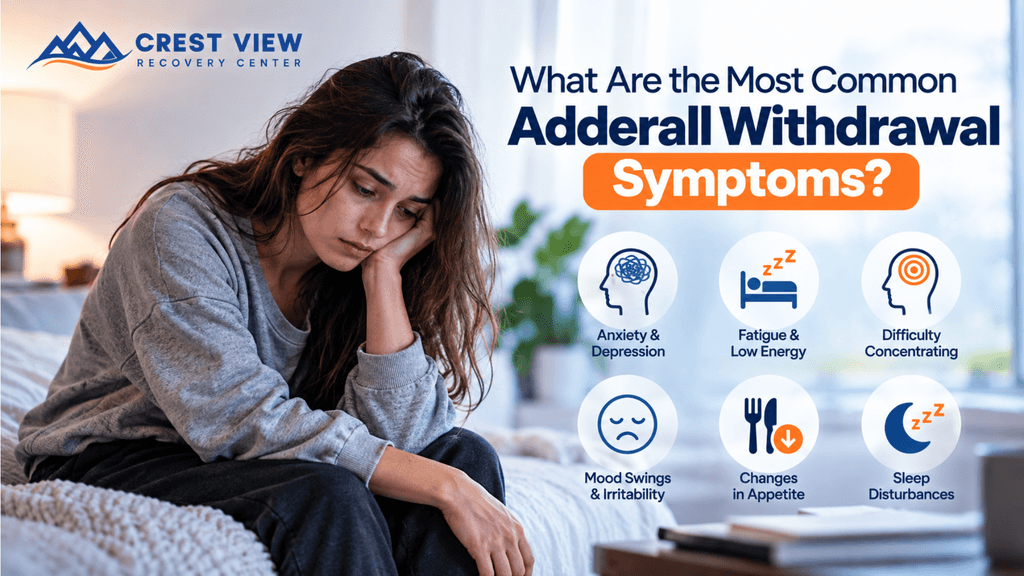
The official Adderall labeling identifies several withdrawal effects following abrupt discontinuation or a significant reduction after prolonged stimulant use. Clinical guidance on broader stimulant withdrawal describes additional symptoms that clinicians may need to monitor. DailyMed
| Symptom | Why it may occur |
| Extreme fatigue or sleepiness | The stimulating effect is no longer present, and accumulated sleep deprivation may also become apparent. |
| Depressed or dysphoric mood | Stimulant withdrawal can temporarily disrupt mood and reward-related functioning. |
| Sleeping too much or insomnia | Both hypersomnia and insomnia are recognized during withdrawal. |
| Vivid or unpleasant dreams | Sleep architecture and sleep patterns can change as stimulant exposure stops. |
| Increased appetite | Appetite may rebound after the appetite-suppressing effects of stimulants are removed. |
| Slowed movement or agitation | Official labeling recognizes both psychomotor retardation and agitation. |
| Difficulty concentrating | Withdrawal, fatigue, sleep disruption, and return of underlying ADHD symptoms can all affect concentration. |
| Cravings | Cravings are particularly important when Adderall has been misused or stimulant use disorder is present. |
| Anxiety or irritability | These may occur during the adjustment period and can overlap with underlying mental-health symptoms. |
The combination can make a person feel markedly different from how they felt while taking the medication. Someone who was highly alert on a stimulant may temporarily experience the opposite pattern: low energy, increased sleep, reduced motivation, and increased appetite.
Why Do I Feel So Exhausted and Depressed After Stopping Adderall?
Exhaustion and low mood are among the best-established stimulant withdrawal symptoms. The Adderall label specifically includes fatigue, dysphoric mood, and depression, while NIDA also identifies fatigue, depression, and disturbed sleep following prescription-stimulant discontinuation.
The explanation is more complicated than the common phrase “your dopamine is depleted.” Adderall changes dopamine and norepinephrine signaling while it is active, and repeated use can lead to physiological adaptation. In addition, people using stimulants may accumulate sleep debt, eat differently, or function at an artificially elevated level of alertness. When stimulation stops, both neurobiological adjustment and the removal of those stimulating effects can contribute to the crash.
The ASAM and AAAP stimulant-use-disorder guideline notes that many patients initially experience a period of sleepiness and irritability after abrupt stimulant reduction, with sleep deprivation and changes in catecholamine activity contributing to the presentation.
Depression deserves particular attention because withdrawal-related low mood can resemble an independent depressive disorder. Clinicians therefore look at whether symptoms improve as withdrawal resolves, existed before Adderall use, or remain unusually severe or persistent. The distinction matters because an underlying mood disorder and temporary stimulant withdrawal may require different treatment plans. ASAM Downloads
Adderall Crash vs. Comedown vs. Withdrawal
“Adderall crash” and “Adderall comedown” are commonly used terms rather than precise medical diagnoses. A comedown often refers to the temporary change in energy, mood, or concentration as an individual dose wears off. Experiencing a difficult evening as a prescribed morning dose fades does not necessarily mean physical dependence has developed.
A crash usually describes a stronger period of exhaustion, sleepiness, low motivation, irritability, or low mood after stimulant effects stop. It can occur during the beginning of withdrawal, particularly after heavier or prolonged exposure.
Withdrawal has a more specific meaning. According to official Adderall labeling, it can occur when a person who has developed physical dependence abruptly stops or substantially reduces the medication.
The distinction matters practically. A brief end-of-dose rebound may call for a medication review, while prolonged withdrawal symptoms, uncontrolled stimulant use, significant depression, or strong cravings may justify a broader medical or behavioral-health assessment.
Adderall Withdrawal Timeline
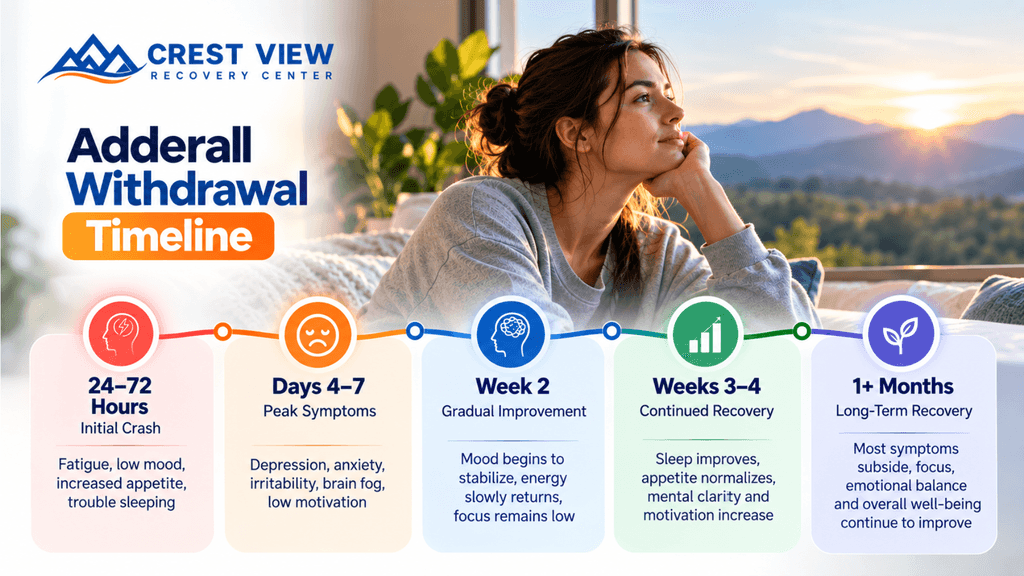
There is no reliable clock that predicts exactly how long Adderall withdrawal will last for one person. Research specifically on therapeutic Adderall discontinuation is more limited than research on broader amphetamine withdrawal, and many withdrawal studies involve people with substantial or nonmedical stimulant use. Timelines from those studies therefore should be treated as general clinical guidance rather than a personal forecast.
First 12 to 24 Hours: The Initial Crash
ASAM’s stimulant-withdrawal guidance notes that after abrupt stimulant reduction, many patients experience roughly 12 to 24 hours of prominent sleepiness and irritability. Extreme fatigue, low motivation, and increased need for sleep may therefore appear early. ASAM Downloads
This early period is often what people mean by an Adderall crash. Someone who has been sleeping poorly while taking stimulants may feel especially tired because stopping can reveal accumulated sleep deprivation at the same time that the stimulating effect disappears.
First Several Days: Fatigue, Mood and Sleep Changes
During the early withdrawal period, symptoms can include depression or dysphoria, fatigue, increased appetite, vivid dreams, insomnia or excessive sleep, and either slowed or agitated movement. These are the symptoms specifically identified in the current Adderall labeling. DailyMed
Older amphetamine-withdrawal research found that the most severe symptoms among people with substantial amphetamine dependence generally concentrated in the first week. However, those findings should not be applied directly to every person taking therapeutic Adderall because the populations and patterns of use differ. PubMed Central (PMC)
After the First Week: Gradual Improvement for Many People
Many acute symptoms may begin easing after the early crash, but sleep, mood, concentration, and energy do not always normalize at the same speed. Recovery can feel uneven: a person may sleep better before motivation returns, or have more energy while still experiencing irritability or poor concentration.
A clinician may also need to determine whether continuing concentration problems represent withdrawal or the return of the ADHD symptoms Adderall had been treating. Similarly, persistent depression should not automatically be attributed to withdrawal when another mental-health condition could be present.
Weeks to Months: Persistent Symptoms in Some People
The ASAM/AAAP guideline notes that some people with stimulant use disorder experience post-acute symptoms such as depression, anxiety, insomnia, or paranoia for weeks to months. This is particularly relevant to people with more substantial stimulant exposure and should not be interpreted to mean that months of withdrawal are expected after ordinary prescribed use. ASAM Downloads
That distinction prevents an important SEO and medical mistake: there is no scientifically defensible single answer such as “Adderall withdrawal lasts exactly 14 days.”
How Long Does Adderall Withdrawal Last?
For many people, the strongest crash occurs early, and symptoms improve progressively afterward. Clinical evidence from broader amphetamine withdrawal suggests that the most intense symptoms often occur during the first several days or first week, although residual mood, sleep, concentration, or craving symptoms can continue longer. PubMed Central (PMC)
Duration depends partly on how much physiological adaptation has occurred. Prolonged exposure, higher or more frequent use, co-occurring substance use, accumulated sleep disruption, and underlying psychiatric conditions may all change what recovery looks like.
This is also why comparing your timeline with someone else’s experience online can be misleading. Two people can both say they “stopped Adderall” while having very different doses, treatment histories, health conditions, and patterns of use.
Does Withdrawal Mean You Are Addicted to Adderall?
No. Physical dependence and addiction are not the same thing.
Physical dependence means that the body has adapted to repeated exposure and produces withdrawal symptoms when the drug is removed or significantly reduced. The Adderall prescribing information explicitly recognizes this process. DailyMed
A stimulant use disorder involves a broader clinical pattern. Examples can include difficulty controlling use, repeated unsuccessful attempts to cut back, significant time spent obtaining or using stimulants, cravings, and continuing despite harmful consequences.
The distinction matters because someone who has taken a prescribed medication consistently may need help managing discontinuation without requiring addiction treatment. Someone whose Adderall use has become compulsive or harmful may benefit from assessment and treatment for stimulant use disorder.
What Can Help During Adderall Withdrawal?
If Adderall was prescribed for you, discuss significant dose changes or discontinuation with the prescribing clinician rather than creating your own medication schedule. Your clinician can consider how long you have used it, the dose, why it was prescribed, your mental-health history, and whether your symptoms represent withdrawal, recurrence of ADHD, depression, another condition, or a combination.
During stimulant withdrawal, ASAM recommends management that focuses on symptoms, safety, and a calming environment. Sleep hygiene and nutritional support may also be appropriate, particularly because disrupted sleep, fatigue, and appetite changes are common. ASAM Downloads
There is not a single medication that reliably “switches off” amphetamine withdrawal. A Cochrane review of treatments for amphetamine withdrawal found that the medications studied had not demonstrated a consistent benefit over placebo for acute withdrawal. Current ASAM guidance therefore emphasizes individualized symptom management rather than a universal Adderall-withdrawal medication.
For someone with a stimulant use disorder, treatment goes beyond getting through the initial crash. The ASAM/AAAP guideline identifies contingency management as a primary evidence-supported component of stimulant use disorder treatment, often combined with approaches such as cognitive behavioral therapy or community reinforcement. This recommendation applies to stimulant use disorder rather than to every person discontinuing a prescribed stimulant. ASAM Downloads
When Should You Get Professional Help?
Contact a healthcare professional if withdrawal symptoms are severe, worsening instead of improving, significantly interfering with basic daily functioning, or accompanied by repeated uncontrolled stimulant use. Persistent depression, severe anxiety, paranoia, hallucinations, or major sleep disturbance also deserve clinical assessment because clinicians may need to distinguish withdrawal from a co-occurring psychiatric condition. ASAM Downloads
Suicidal thinking requires immediate attention. ASAM recommends assessing suicide risk during stimulant intoxication or withdrawal, and the CDC states that people in the United States who are struggling or in crisis can call or text 988 through the 988 Suicide & Crisis Lifeline. Call 911 or seek emergency medical care for an immediate threat to life, a suicide attempt, loss of consciousness, seizure, severe confusion, serious breathing problems, or another medical emergency.
Treatment for Problematic Adderall or Stimulant Use in Asheville
When Adderall use has become difficult to control, withdrawal is only one part of the clinical picture. Treatment may also need to address stimulant cravings, patterns of use, sleep, mental health, relationships, coping skills, and the circumstances that make returning to stimulant use more likely.
Crest View Recovery Center currently maintains a dedicated stimulant addiction treatment program in Asheville. Its current program information also describes individual, family, and behavioral therapies as possible components of stimulant addiction treatment. Crest View Recovery Center
Treatment intensity should depend on an individualized assessment rather than the substance name alone. Crest View currently lists Day Treatment and SACOT in Asheville and an Intensive Outpatient Program. The Day Treatment/SACOT page describes these services as outpatient clinical care and specifically states that Crest View collaborates with an off-site detox facility, so Crest View should not be described as providing on-site medical detox based on the information currently available. Crest View Recovery Center
Mental health can be particularly important during stimulant recovery because depression, anxiety, ADHD, trauma symptoms, or other conditions can overlap with withdrawal. Crest View’s current dual diagnosis treatment information describes outpatient treatment addressing substance use alongside co-occurring mental-health conditions. Treating both matters because persistent psychiatric symptoms can otherwise be mistaken for withdrawal or left untreated. Crest View Recovery Center
Crest View also describes a reality-based treatment approach that emphasizes present-focused behavior, practical planning, and applying coping skills to everyday situations. That is Crest View’s treatment philosophy; it should not be interpreted as evidence that the approach is clinically superior to other evidence-based treatment models. Crest View Recovery Center
For people who need continuing support after structured treatment, Crest View currently lists aftercare planning as part of its ongoing recovery services. Continuing care can be practically useful because cravings, mood symptoms, and real-world triggers do not necessarily disappear when the initial withdrawal period ends.
If stimulant use has become difficult to control, you can speak with the Crest View admissions team about the current programs and which level of care may warrant further clinical assessment. Coverage varies by individual plan, so benefits should be checked through the center’s current insurance verification process rather than assuming a particular service will be covered. Crest View Recovery Center
Conclusion
Adderall withdrawal can reasonably explain exhaustion, depressed mood, sleep changes, increased appetite, and difficulty concentrating after prolonged stimulant use is stopped or substantially reduced, but there is no single timeline that applies to everyone. If symptoms are severe, persistent, or connected with problematic stimulant use, professional assessment can help separate temporary withdrawal from ADHD symptoms or another mental-health condition; people considering treatment in Asheville can also review Crest View Recovery Center’s verified stimulant addiction treatment options.
Frequently Asked Questions
1. What are the most common Adderall withdrawal symptoms?
Common Adderall withdrawal symptoms include fatigue, depressed or dysphoric mood, sleep changes, vivid dreams, increased appetite, and either slowed movement or agitation. Difficulty concentrating, irritability, anxiety, or cravings may also occur, particularly with more substantial stimulant exposure.
2. How long does Adderall withdrawal last?
There is no exact duration that applies to everyone. Broader amphetamine-withdrawal studies suggest the strongest symptoms commonly occur during the early days or first week, while some mood, sleep, concentration, or craving symptoms can continue longer, especially in people with stimulant use disorder.
3. What happens if you suddenly stop taking Adderall?
After prolonged use, abrupt discontinuation or a substantial dose reduction can cause fatigue, depression, sleep changes, increased appetite, vivid dreams, and psychomotor changes. If Adderall is prescribed to you, discuss stopping or changing the dose with the prescribing clinician rather than making an unsupervised medication plan.
4. What is an Adderall crash, and how long does it last?
“Adderall crash” is an informal term for the drop in energy, alertness, or mood that may occur when stimulant effects wear off or withdrawal begins. ASAM notes that prominent sleepiness and irritability can occur during the first 12 to 24 hours after abrupt stimulant reduction, although an individual’s symptoms may extend beyond that period.
5. Does Adderall withdrawal mean I am addicted?
No. Withdrawal can occur because of physical dependence, which is a physiological adaptation to repeated medication exposure and is not equivalent to addiction. A stimulant use disorder requires a broader pattern of clinically significant problems related to stimulant use.
6. Can Adderall withdrawal cause depression?
Yes. Depression and dysphoric mood are specifically listed among possible withdrawal effects following prolonged stimulant use. Severe, persistent, or worsening depression should be evaluated rather than automatically attributed to withdrawal, particularly if there are suicidal thoughts or a previous mood disorder.
7. When should I seek treatment for Adderall withdrawal?
Professional assessment is appropriate when symptoms are severe, prolonged, worsening, interfering with normal functioning, or occurring alongside uncontrolled stimulant use, psychosis, or significant mental-health symptoms. If you are having suicidal thoughts or are in crisis in the United States, call or text 988; call 911 for an immediate medical emergency.