
Key Takeaway:
If you are waiting for a drug test, worried about unexpected fentanyl exposure, or concerned about your own or someone else’s opioid use, it is reasonable to want a clear timeline. The difficult part is that there is no single number that applies to every person or every type of test.
Direct answer: Fentanyl is commonly detectable in urine for about 1-3 days after limited exposure, while blood testing generally reflects more recent use and hair testing can capture a much longer history. Repeated fentanyl exposure can extend urine detection, especially for norfentanyl. Exact timing depends on dose, frequency, route, metabolism, health factors, and the sensitivity of the specific test.
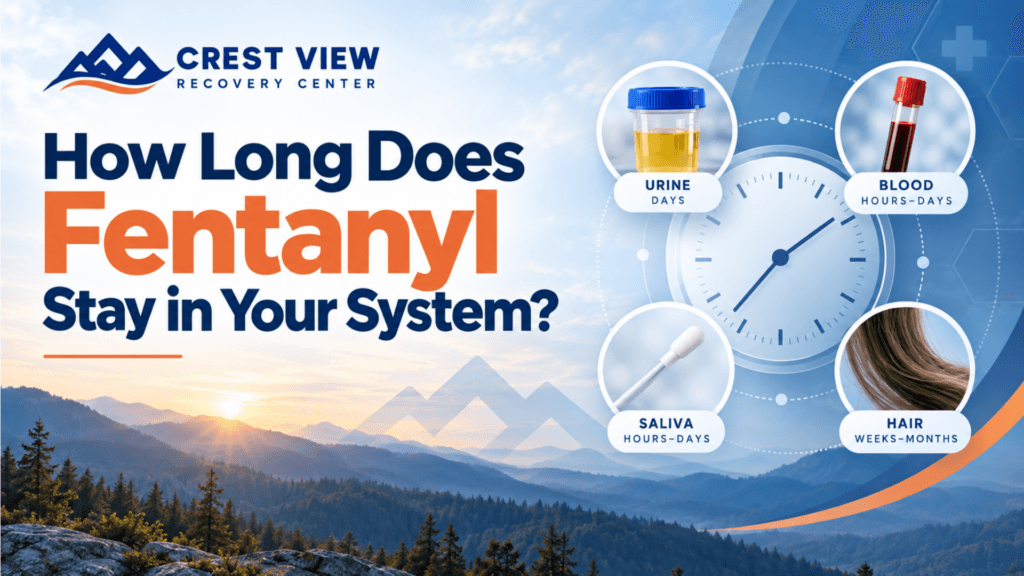
Fentanyl Detection Times by Drug Test
Drug tests do not all answer the same question. Urine testing looks for recent exposure over a period of days, while blood usually provides a shorter window. Hair testing can provide a much longer look-back period.
| Test type | General detection window | Important context |
| Urine | Often about 1-3 days after limited exposure | Norfentanyl may remain detectable longer, particularly after repeated use |
| Blood | Usually several hours to roughly 1-2 days | More useful for relatively recent exposure |
| Saliva/oral fluid | Short and test-dependent | Detection is less consistent and depends heavily on the assay |
| Hair | Up to about 90 days in appropriate testing | Better for identifying a longer-term pattern than determining the exact day of use |
Mayo Clinic Laboratories lists an approximate urine detection time of up to three days for fentanyl and norfentanyl, while medically reviewed toxicology information reports approximately 5-48 hours for blood and up to about three months for hair. These are estimates rather than guaranteed cutoff points. Mayo Clinic Laboratories’ fentanyl testing guidance
That distinction matters because a test result depends on both the person’s biology and the laboratory method. Two people with similar exposure can therefore have different results on the same day.
How Long Does Fentanyl Stay in Urine?
For a single or limited fentanyl exposure, about 24-72 hours is a commonly cited urine detection range. Urine testing often looks for fentanyl as well as norfentanyl, its primary metabolite.
Norfentanyl matters because the body converts much of the fentanyl it processes into this metabolite. A person may therefore have little parent fentanyl remaining while a urine test can still identify evidence of prior exposure.
However, the 1-3 day estimate should not be interpreted as a deadline after which every person will test negative.
Repeated fentanyl use can extend urine detection
Research involving people with repeated fentanyl exposure has found substantially longer clearance times.
In a small study of 12 people with opioid use disorder who tested positive for fentanyl when entering treatment, the mean estimated clearance time was 7.3 days for fentanyl and 13.3 days for norfentanyl. One participant remained positive for norfentanyl for 26 days after the reported last opioid use. Read the peer-reviewed fentanyl clearance study on PubMed
Those findings should not be treated as the expected timeline for everyone. The study was small and specifically involved people with opioid use disorder and repeated fentanyl exposure.
The practical takeaway is more important: a positive fentanyl urine test does not by itself tell you exactly when fentanyl was last used.
Why Can Fentanyl Remain Detectable After Its Effects Wear Off?
How long a drug affects someone and how long a laboratory can detect it are different questions.
Fentanyl’s noticeable opioid effects may decline well before every trace of fentanyl or norfentanyl has left the body. Drug tests can detect very small concentrations that are no longer producing the same noticeable effects.
This is why calculating a few drug half-lives does not reliably predict the exact day a person’s test will become negative.
Fentanyl and norfentanyl are not the same thing
The liver metabolizes fentanyl primarily into norfentanyl. Testing may look for one or both.
Norfentanyl can be useful for confirming previous fentanyl exposure because it may remain detectable after the concentration of fentanyl itself has fallen. Mayo Clinic Laboratories therefore reports detection information for both fentanyl and norfentanyl.
This distinction becomes particularly important after repeated use, when metabolite clearance can take longer.
What Affects Fentanyl Detection Time?
There is no reliable formula that can tell an individual exactly when a fentanyl drug test will become negative. Several factors influence the answer.
Frequency and duration of exposure
Repeated exposure can produce a longer detection period than a single medical dose or isolated exposure.
This matters because fentanyl is highly lipophilic, meaning it distributes into body tissues. With frequent exposure, elimination can become more prolonged than the simple timelines sometimes quoted for a single dose. The longer urine clearance documented in people with regular illicit fentanyl exposure demonstrates why frequency of use needs to be considered when interpreting a fentanyl urine test.
Amount of fentanyl
Greater exposure can generally take longer to metabolize and eliminate than a smaller exposure, although the concentration of illicit fentanyl can be unpredictable.
That unpredictability is clinically important. According to the CDC, illegally manufactured fentanyl may be present in counterfeit pills or mixed with other substances without the person knowing it is there. CDC information about fentanyl
Route of administration
Injected, inhaled, ingested, and transdermal fentanyl do not have identical pharmacokinetic profiles.
Prescription fentanyl patches, for example, release medication through the skin over time. That makes their elimination profile different from a single intravenous medical dose.
Liver and kidney function
The liver is primarily responsible for metabolizing fentanyl, while metabolites ultimately need to be eliminated from the body.
Changes in organ function can therefore influence how quickly a drug or its metabolites are cleared. This does not mean someone can accurately calculate their own detection time from health status alone; laboratory cutoff levels and exposure pattern still matter.
The sensitivity of the test
A highly sensitive laboratory method can detect a smaller concentration than a test with a higher cutoff.
This is one reason two testing programs can potentially report different results from exposures occurring on similar timelines.
Does Fentanyl Show Up on a Standard Drug Test?
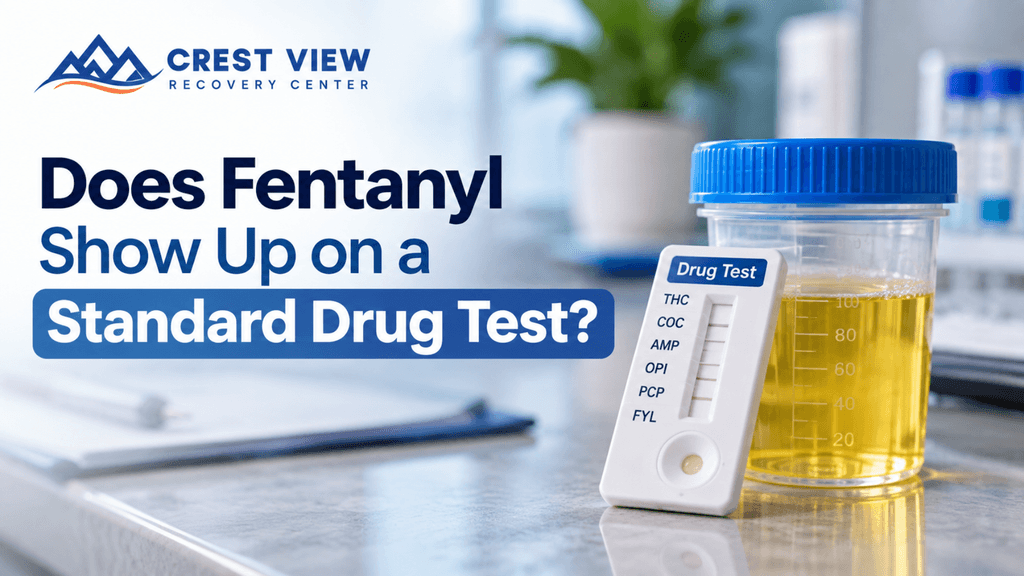
It depends on what the test panel actually includes.
Fentanyl is a synthetic opioid and should not automatically be assumed to be covered simply because a drug screen has an “opiates” category.
However, older articles stating that routine workplace drug tests never include fentanyl are now outdated in an important U.S. context. SAMHSA states that fentanyl was added to the authorized federal workplace drug-testing panel effective July 7, 2025. SAMHSA’s current federal workplace drug-testing FAQ
Outside federal testing programs, the exact panel can vary by employer, laboratory, healthcare organization, legal setting, or treatment program.
If a test result has employment, medical, legal, or family consequences, the most useful question is therefore not simply, “Was this an opioid test?” but rather, “Did this specific panel test for fentanyl and/or norfentanyl?”
Can a Fentanyl Test Tell Exactly When Someone Used It?
Usually not.
A positive test establishes that the substance or metabolite was detected above the laboratory’s reporting threshold. It does not function like a timestamp.
For example, someone with repeated fentanyl exposure may continue excreting norfentanyl substantially longer than a person who received a single medical dose. The small clinical study documenting mean norfentanyl clearance of more than 13 days demonstrates why interpreting every positive result as extremely recent use can be misleading.
This matters especially when testing affects clinical decisions or other significant consequences. Unexpected results should be interpreted in the context of the specific laboratory method, cutoff, exposure history, prescribed medications, and whether appropriate confirmation was performed.
Fentanyl Test Results Do Not Measure Impairment
A detectable fentanyl or norfentanyl result does not necessarily mean that a person is currently experiencing fentanyl’s intoxicating or sedating effects.
Detection and impairment operate on different timelines.
Likewise, a negative test cannot by itself establish that an unknown drug was safe or that a person was never exposed. Testing has limits based on timing, the substance being tested for, and the sensitivity of the assay.
What If Fentanyl Exposure Was Unexpected?
Illegally manufactured fentanyl can be mixed into other substances or pressed into counterfeit pills, sometimes without the person using them knowing fentanyl is present. The CDC identifies illicitly manufactured fentanyl as a major driver of U.S. opioid overdose harm.
If someone becomes unusually difficult to wake, loses consciousness, or has dangerously slow or stopped breathing after possible opioid exposure, treat the situation as a medical emergency.
Call 911 and administer naloxone if it is available. Naloxone can reverse an opioid overdose involving fentanyl when it is given in time.
A drug-test detection window should never be used to decide whether someone experiencing possible overdose symptoms needs emergency care.
When Does Fentanyl Use Become a Treatment Concern?
A fentanyl drug test alone cannot diagnose opioid use disorder.
More meaningful warning signs include repeatedly using opioids despite harm, difficulty controlling use, strong cravings, withdrawal, tolerance, unsuccessful attempts to reduce use, or substance use interfering with relationships, work, health, or daily responsibilities.
When opioid use disorder is present, treatment does not have to rely on willpower alone.
SAMHSA identifies buprenorphine, methadone, and naltrexone as FDA-approved medications used to treat opioid use disorder. Medication selection depends on individual circumstances and medical assessment. SAMHSA treatment options for opioid use disorder
These medications are clinically important because opioid use disorder involves persistent changes in craving, withdrawal, tolerance, and behavior. Appropriate medication can address some of those biological components while other treatment addresses behavioral, psychological, social, and recovery needs.
Fentanyl Treatment Options at Crest View Recovery Center
For readers in Asheville or considering treatment in North Carolina, Crest View Recovery Center currently publishes a dedicated fentanyl addiction treatment resource and information about opioid addiction treatment.
Current Crest View materials list multiple levels and components of outpatient-oriented care, including:
- Day Treatment and SACOT in Asheville
- Intensive Outpatient Program (IOP)
- Medication-Assisted Treatment (MAT)
- aftercare planning and continued support
Crest View’s current Day Treatment/SACOT page describes collaboration with an off-site detox facility, so Crest View should not be characterized here as providing on-site medical detoxification.
That distinction matters because the appropriate starting point should reflect a person’s medical stability, withdrawal needs, psychiatric symptoms, substance-use pattern, and ability to participate safely in outpatient treatment.
Someone who needs acute medical detoxification or emergency treatment may require a different level of care before beginning an outpatient program.
For questions about whether Crest View’s current programs fit a particular situation, readers can review its admissions process or speak with the admissions team.
Crest View also provides an insurance verification service. Insurance benefits are plan-specific, so verification is important because coverage can depend on network status, medical necessity requirements, deductibles, copays or coinsurance, authorization requirements, and the approved level and duration of care.
Conclusion
For many people, fentanyl can be detected in urine for roughly 1-3 days after limited exposure, but that window can become substantially longer with repeated use, particularly when a test measures norfentanyl. The specific test, exposure pattern, and individual biology all matter, so no detection timeline can guarantee a negative result on a particular date. If ongoing fentanyl use is the larger concern, Crest View Recovery Center’s admissions team can provide current information about its Asheville treatment options and help determine whether its level of care is appropriate.
Frequently Asked Questions
1. How long does fentanyl stay in urine?
Fentanyl and norfentanyl are commonly detectable in urine for roughly 1-3 days after limited exposure, although the window can be longer after frequent or repeated use. Mayo Clinic Laboratories lists an approximate detection period of up to three days but specifically notes that dose, frequency, and individual metabolism affect the result.
2. Does fentanyl show up on a regular drug test?
It depends on the panel being used. As of July 7, 2025, fentanyl is included in the authorized federal workplace testing panel, but non-federal workplace, healthcare, treatment, and legal testing programs can use different panels.
3. Can fentanyl still be detected after three days?
Yes, particularly after repeated exposure. In a small study involving people with opioid use disorder, fentanyl and norfentanyl remained detectable substantially longer than the often-cited 1-3 day urine window, so three days should not be treated as a guaranteed cutoff.
4. How long does norfentanyl stay in urine?
Norfentanyl may remain detectable longer than fentanyl itself. Although typical laboratory guidance often places detection within several days, a small study of people with repeated fentanyl exposure found a mean norfentanyl clearance estimate of 13.3 days, demonstrating that repeated use can produce much longer timelines.
5. Does a positive fentanyl urine test show exactly when fentanyl was used?
No. A positive result shows that fentanyl or a metabolite was detected above the test’s cutoff, but it generally cannot determine the exact time or amount of exposure. Frequency of use, test sensitivity, metabolism, and prolonged norfentanyl clearance can all influence the result.
6. Is the fentanyl detection window the same as how long its effects last?
No. A drug or metabolite may remain measurable after the noticeable effects have declined. This matters because a positive drug test should not automatically be interpreted as proof of current impairment.
7. What should I do if fentanyl use is becoming difficult to control?
Consider an assessment from a qualified addiction-treatment or medical professional rather than relying on drug tests alone. Evidence-based opioid use disorder treatment may include medications such as buprenorphine, methadone, or naltrexone along with individualized behavioral and recovery support.